
The Weekly Briefing
Curated news and insights for police leaders, technologists, and researchers

Table of Contents
Like School Shootings, Political Violence Is Becoming Almost Routine
I Ran the LAPD—Troops in Cities Carry Risks (Op-Ed)
New Orleans Council Moves to Loosen Facial-Recognition Limits
Operation Soteria Shield Rescues 109 Children, Nets 244 Arrests in Texas
Ohio Officer Collapses from Fentanyl During Traffic Stop
Mindfulness Training Improves Quality of Life for Officers
Secret Service Showcases Drone Tech to Midwest Agencies
$9.4 M Gift to Turbocharge SFPD Drone Program
Baltimore Police Face Staffing Shortages; AI Seen as Potential Aid
Officer Gabriel Facio Killed After Road-Rage Stop in Arizona
Like School Shootings, Political Violence Is Becoming Almost Routine
Saturday’s assassination of Minnesota state Rep. Melissa Hortman and her husband—and the near-fatal shooting of state Sen. John Hoffman and his wife—highlights a growing pattern: violent acts against public figures are now part of the American landscape. In just the past three months, the Pennsylvania governor’s residence was set ablaze while the family slept; two Israeli embassy workers were gunned down in Washington; protesters in Boulder were doused in fire; and political and commercial targets—from a New Mexico GOP headquarters to a Tesla dealership—were firebombed. President Trump, with two attempts on his life during his campaign, and other lawmakers, face mounting threats that echo the routine horror of school shootings. Experts warn these attacks aim not only to harm individuals but to chill dissent and reshape public life.
🔗 Read more
I Ran the LAPD—Troops in U.S. Cities Carry Risks
In this opinion piece, former Los Angeles Police Department Chief Michel R. Moore reflects on the recent deployment of federal troops to Los Angeles and cautions against using military forces for civilian crowd management. Drawing on his 40-year policing career—including the 1992 L.A. unrest—Moore highlights differences in training, mission, and oversight between soldiers and local law enforcement. He notes that California’s existing mutual-aid systems and National Guard protocols are designed for domestic disturbances, ensuring civilian control, clear rules of engagement, and accountability. Moore warns that military involvement in routine public-safety operations can sow confusion, blur lines of authority, and undermine public confidence in both institutions.
🔗 Read more
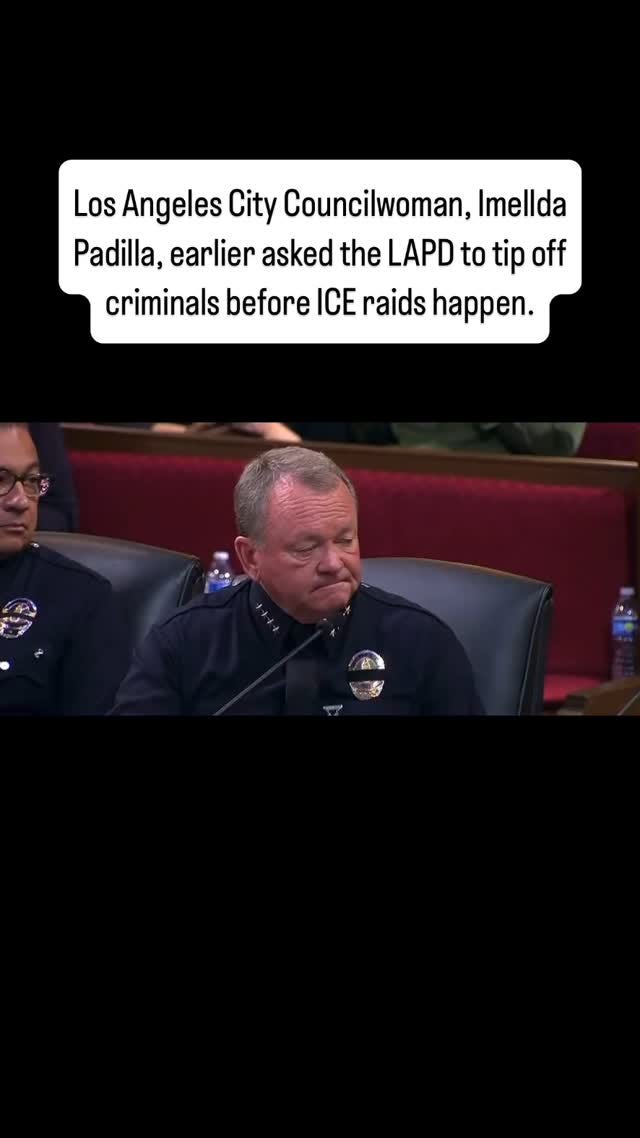
Watch LAPD Chief Respond to Call for Obstruction of Justice
New Orleans Council Moves to Loosen Facial-Recognition Limits
In the wake of a deadly Bourbon Street attack and the escape of 10 detainees, New Orleans City Council members are pushing to rewrite a 2022 ordinance that currently restricts the police department’s use of live facial-recognition alerts from Project NOLA’s 200-camera network. Superintendent Anne Kirkpatrick suspended those alerts in April pending a review of compliance with city rules, even as security consultants urged major upgrades to NOPD’s intelligence tools. Proponents—including a coalition of 600+ businesses and nonprofits—argue that streamlined access would help recapture fugitives and prevent violent crimes.
🔗 Read more
📬 First time reading the Weekly Briefing? Join us here
👥 Already a fan? Consider sharing via email, LinkedIn or X
Operation Rescues 109 Children, Nets 244 Arrests
During a month-long operation, more than 70 Texas agencies—including the FBI’s Dallas Division and the North Texas ICAC Task Force—joined the National ICAC Task Force for Operation Soteria Shield. The coordinated effort targeted the production, distribution, and possession of child sexual-abuse material, resulting in 244 arrests and the rescue of 109 victims. Investigators also seized terabytes of illicit content for forensic analysis, and grand-jury indictments have already been returned in the Eastern District of Texas.
🔗 Read more
Ohio Officer Collapses from Suspected Fentanyl
During an early-morning traffic stop in Fostoria, Ohio, Officer Brayden Moon located a bag of white powder—later believed to be fentanyl—in a passenger’s purse. The substance became airborne during the search, exposing Moon and causing him to collapse. Fellow officers administered multiple doses of Narcan before he was transported to a local hospital, treated, and released.
🔗 Read more
Mindfulness Training Improves Quality of Life for Officers
A randomized controlled trial of 170 Brazilian police officers examined an 8-week Mindfulness-Based Health Promotion (MBHP) program. Officers in the MBHP group saw large, statistically significant gains in overall quality of life. Self-compassion increases mediated improvements across all QoL domains. This trial demonstrates both the feasibility and the durable mental-health benefits of mindfulness training in high-stress policing environments.
🔗 Read more
Secret Service Showcases Drone Tech
At Soldier Field, the U.S. Secret Service Chicago Field Office convened over 50 local and state law-enforcement agencies for a deep dive into the latest drone capabilities—from real-time crime response and infrared night searches to advanced threat detection inspired by recent international attacks. Prompted by communication breakdowns during last year’s assassination attempt on President Trump, the event stressed interagency collaboration, tactical best practices, and an expanded airspace division.
🔗 Read more
$9.4 M Gift to Turbocharge SPFD Drone Program
San Francisco’s Police Commission unanimously accepted a $9.4 million donation from crypto billionaire Chris Larsen’s San Francisco Police Community Foundation to turbocharge the SFPD’s drone program and fund the Real Time Investigation Center (RTIC). Of that sum, $2 million will lease a 14,000 sq ft temporary HQ, while the remaining $7.4 million expands the “Drones as First Responder” initiative—adding 10 new launch sites (primarily at fire stations), two new drone models, and broadening tactical and thermal-imaging support for both police and firefighters. The program, born out of Prop E’s tech-surveillance push, has already aided over 500 arrests since late 2024.
🔗 Read more
Baltimore Police Face Staffing Shortages; AI Seen as Potential Aid
Baltimore’s department is down 491 officers and spent over $64 million on overtime in 2024. Former federal agent Joe Vince highlights how AI tools—ranging from predictive analytics and facial recognition to acoustic gunshot detection—can sift through vast surveillance data and speed investigations, as seen in NYC’s manhunt for Brian Thompson’s alleged killer. While AI won’t replace boots on the ground, it may help crack cases faster. Mayor Brandon Scott has issued citywide AI guidelines, though BPD says it currently does not use AI in operations.
🔗 Read more
Officer Gabriel Facio Killed After Road-Rage Stop in Arizona
Officer Gabriel Facio, 46, of the Apache Junction (AZ) PD was shot in the face and later died after pulling over a driver for a road-rage incident on June 2. The suspect—who initially complied—produced a handgun, opened fire, and wounded Officr Facio; officers returned fire. Officer Facio succumbed to his wounds six days later. The driver, also hospitalized, faces homicide charges.
🔗 Read more