
The Weekly Briefing 🇺🇸

Finding Wanted Faces
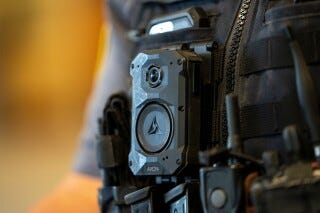
Police in Edmonton, Alberta have begun testing AI-powered body cameras capable of detecting faces from a watch list of more than 7,000 people classified as high risk, according to The Associated Press. The pilot, launched last week with about 50 officers, uses facial recognition to flag individuals considered violent, armed, or high-risk offenders, though officers will not see matches in real time and results will be reviewed later. Axon CEO Rick Smith said the project is “early-stage field research,” while Alberta’s privacy commissioner is reviewing a required privacy impact assessment. 📸 More here
Statewide Drone Pilot
Ohio has launched the nation’s first statewide “Drones for First Responders” pilot program to test how drones can respond to 911 calls by providing real-time situational awareness before officers, firefighters, and medics arrive on scene, according The Ohio Newsroom. The two-year program will help agencies across the state acquire drones, train operators, and standardize approvals for use in car crashes, natural disasters, and search-and-rescue calls. Departments already participating include Cincinnati Police, Franklin County Sheriff’s Office, Cleveland, Dayton, and Hamilton County, which owns 16 drones. Supporters say drones can cover large areas quickly and help address staffing shortages. A separate bill passed the Ohio House in November would require a search warrant for most non-emergency drone use. 🔗 More here
Social Workers in 911 Centers
More Minnesota metro-area counties are embedding social workers inside 911 call centers to handle non-emergency calls related to mental health, homelessness and substance use, beginning with a pilot program in Minneapolis that placed a licensed social worker inside the city’s 911 center in fall 2025, according to The Associated Press; Hennepin, Ramsey and Washington counties now have or are adding embedded social workers, with Ramsey County seeking to expand its 2023 pilot to full 24/7 coverage, while Minneapolis’ program runs through 2026 and allows screened non-emergent callers to receive direct crisis guidance, referrals to mental health resources, housing assistance after eviction, and access to mobile crisis teams instead of automatic police dispatch. ☎️ More here
DOJ Targets Extremist Groups
U.S. Attorney General Pam Bondi ordered federal law enforcement to step up investigations into Antifa and other “extremist groups,” directing the FBI to prioritize domestic terrorism cases and compile a list of entities suspected of engaging in such activity, according to an internal Justice Department memo reviewed by Reuters. The memo instructs Joint Terrorism Task Forces to focus on these investigations, calls for probing potential tax crimes involving extremist groups, and directs federal agencies to share intelligence related to Antifa. It also orders the FBI to review the past five years of incidents that may involve domestic terrorism and to develop new strategies to disrupt entire criminal networks. The Justice Department also instructed its grant-making offices to prioritize funding for state and local programs focused on preventing domestic terrorism and directed the FBI to improve its tip line for public submissions of suspected extremist activity. 🔗 More here
New Podcast — Kristen Mahoney
Human-Style Driving Decisions
Police in California are encountering new enforcement challenges as Waymo has updated its self-driving software to make vehicles more “confidently assertive,” according to The Wall Street Journal. Officers in San Bruno recently pulled over a Waymo for an illegal U-turn, but under current state law they cannot issue a moving violation citation to a driverless vehicle, though that authority is expected to change in 2026. Waymo confirmed its vehicles now make more human-style driving decisions to avoid disrupting traffic, such as crossing double yellow lines to pass stopped vehicles. The company reports its cars have driven 100 million fully autonomous miles across five U.S. cities and experienced 91% fewer serious-injury crashes than human drivers. 🤖 More here
Policing Autonomous Vehicles
Police officials from Austin, Los Angeles, Phoenix, and San Francisco told the Police Executive Research Forum (PERF) that autonomous vehicles (AVs) routinely struggle with irregular traffic patterns, officer-directed traffic, and blocking lanes during pickups and drop-offs, based on ongoing operations involving Waymo and prior deployments by Cruise. Officers reported AVs failing to properly yield to emergency vehicles, misinterpreting temporary traffic controls, and requiring manual intervention through company hotlines. Agencies rely heavily on geofencing to restrict AV access near major incidents, hospitals, and special events, but implementation requires direct coordination with companies and can be time-consuming. Police in California currently cannot issue moving violation citations to AVs until 2026, while Texas officers must use a complex affidavit process. 🚙 PERF report here
Michigan Crime Clearance Bill
Michigan lawmakers are considering bipartisan legislation to increase arrests and clearance rates for violent crimes through a new state grant program for local law enforcement, according to Michigan Advance. Sponsored by Sen. Stephanie Chang (D-Detroit) and Rep. Sarah Lightner (R-Springport), the bills would fund detectives, crime analysts, evidence-processing technology, and witness support. Chang testified that higher clearance rates improve deterrence more effectively than harsher sentencing. Some lawmakers questioned a provision allowing the state police to retain 15% for administrative costs and whether past funding increases have failed to improve clearance rates. The bills are supported by the Michigan Fraternal Order of Police, Our Street Institute, and Oakland County Sheriff Mike Bouchard. 🔗 More here
Hawaii Clearance Struggles
Hawaii law enforcement agencies are facing major barriers to solving violent crimes due to geographic isolation, shortages of detectives and forensic staff, and limited lab capacity, according to officials and newly released state data reported by The Associated Press. Evidence often must be shipped by mail to Oahu or the mainland for testing, increasing delays and risk of loss, while witnesses and victims frequently leave the islands, complicating prosecutions. Honolulu police cleared about 35% of violent crimes in 2024, compared to 49%–55% in Maui, Kauai, and Hawaii counties, with rape cases solved less than one-third of the time statewide. Law enforcement leaders told lawmakers that detective shortages, overtime-driven incentives pulling experienced investigators back to patrol, and the high cost of out-of-state forensic testing—sometimes up to $30,000 per case—continue to undermine clearance efforts. 🔗 More here
Suspect Shot Pointing Gun
🚔 Daily police news @ Police Briefing